
What is needleless anesthesia?
Needleless anesthesia is a comfortable anesthesia method applied without the use of needles, in which a local anesthetic is delivered under the skin under pressure.
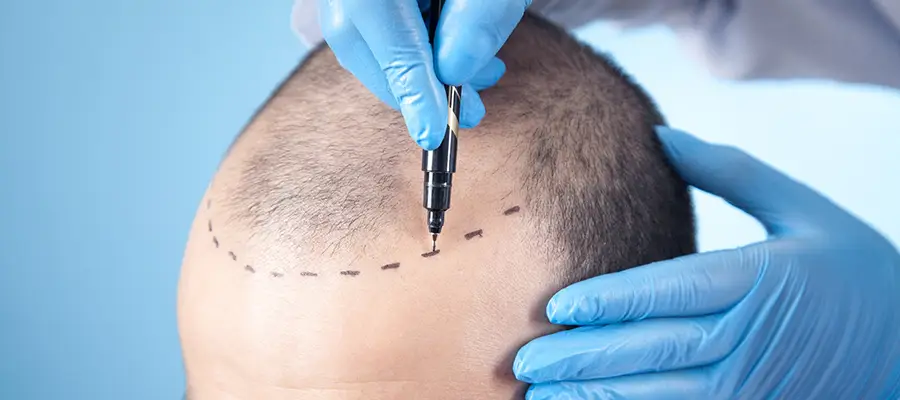
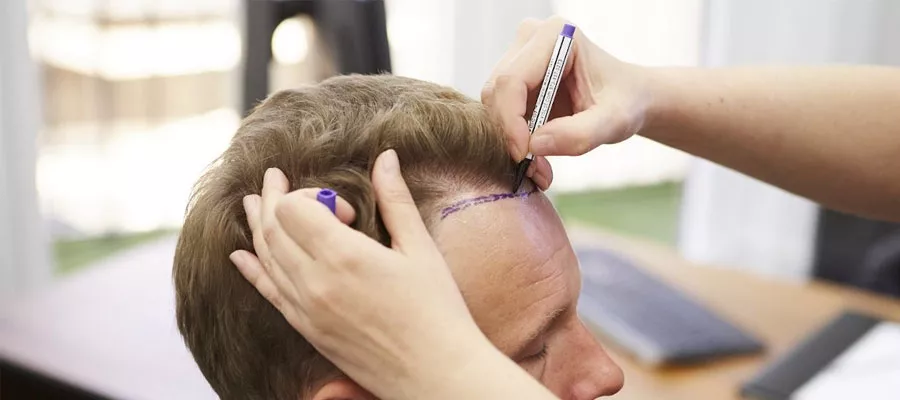
This method was developed especially for patients with needle phobia. It increases patient comfort in aesthetic procedures such as hair transplantation. It is preferred because it is applied quickly, painlessly, and without bleeding. The anesthetic substance is injected under the skin through micro-holes under pressure. Its effect is similar to the needle method and does not cause discomfort after the procedure. Thanks to the needle-free application, stress levels are reduced, and the procedure proceeds more smoothly. It is widely used in modern hair transplantation clinics.
How is needle-free anesthesia administered?
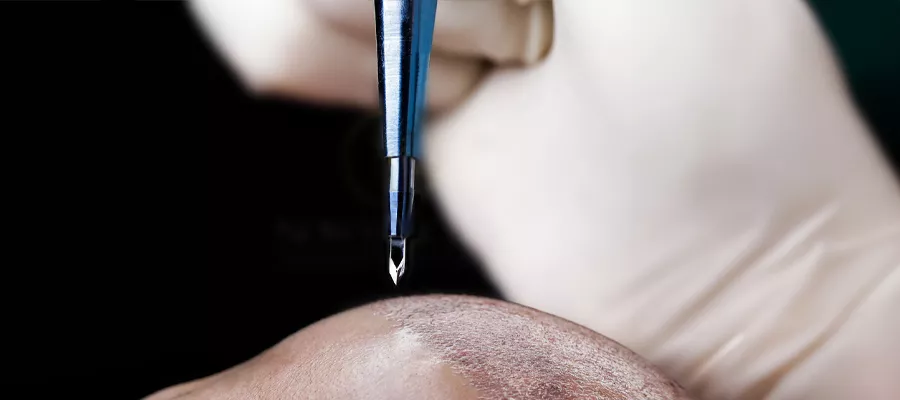
Needleless anesthesia is administered by injecting an anesthetic substance under the skin under pressure using a special device.
This procedure does not use needles; the device is placed in contact with the skin and delivers the medication under the skin using high pressure. The procedure takes place in seconds and is painless. It is generally preferred in hair transplantation and aesthetic applications. Local numbness occurs quickly, and the patient does not feel any injection sensation. Allergy checks are performed before the procedure. The effect of the anesthesia starts in the same amount of time as with the classic method and lasts longer. Thus, every stage of the procedure is comfortable.
Where is needleless anesthesia used?
Needle-free anesthesia is commonly used in cosmetic procedures such as hair transplantation, skin rejuvenation, and dental treatments.
The aim of this method is to increase patient comfort and offer an alternative for individuals with needle phobia. It is most commonly used in hair transplantation procedures. It is also preferred in medical aesthetic procedures, dermal filler applications, mesotherapy, and some dental treatments. Thanks to the application of the anesthetic under pressure, the procedure is painless and less stressful. The application time is shortened, and the patient feels comfortable during the procedure. Beyond the medical field, its use is also widespread in beauty centers.
The Difference Between Needleless Anesthesia and Classic Needle Anesthesia
Needle-free anesthesia is administered via pressure, while the classic method involves injecting the anesthetic under the skin with a needle.
In needle-free systems, there is no injection pain, while in the classic method, pain may be felt at the needle insertion. Both methods provide local anesthesia, but needle-free application is more comfortable for individuals with needle phobia. Procedures performed with needle-free devices are faster and the risk of bleeding in the skin is minimal. The classic method, however, may provide deeper anesthesia in some cases. Which method is used is determined according to the type of procedure and the patient’s needs. In aesthetic procedures such as hair transplantation, the needle-free method is preferred.
Does needle-free anesthesia completely eliminate pain?
Yes, needle-free anesthesia significantly reduces localized pain and provides comfort during the procedure.
This method, applied under pressure to the skin, quickly initiates numbness. A brief feeling of pressure may occur before the procedure, but there is no pain from the needle insertion. Especially in hair transplantation and aesthetic procedures, the patient does not experience significant pain during the procedure after anesthesia. It provides sufficient numbness for superficial procedures. However, additional support may sometimes be needed for very deep procedures. Overall, patient satisfaction and procedure comfort are quite high.
Advantages of Needleless Anesthesia
Needle-free anesthesia offers advantages in many aesthetic procedures due to its painless application and increased patient comfort.
It is ideal for patients with needle phobia. The risk of bleeding, bruising, and infection is lower compared to the classic method. The procedure time is short, and no pre-procedure preparation is required. It significantly increases the comfort of procedures in areas such as hair transplantation and mesotherapy. Since patients do not experience needle-related anxiety, the procedures are less stressful. At the same time, since there are no needle marks, there is no trauma to the skin. It is a technology frequently preferred in modern clinics.
Disadvantages of Needleless Anesthesia
In some cases, needle-free anesthesia may have a more superficial effect compared to the classic method.
In procedures requiring access to deep tissues, the anesthetic effect may be insufficient. In such cases, needle support may be necessary. Additionally, some patients may experience slight discomfort during pressure application. The device requires careful use and is not available in every clinic. Its application area is limited; it may not be as effective as the classic method in very large areas. Nevertheless, due to its advantages, it is widely preferred, especially in aesthetic procedures.
Who is it suitable for?
Needle-free anesthesia is particularly suitable for people who are afraid of needles and who will undergo local procedures.
This method is an ideal option for individuals undergoing superficial and localized procedures such as hair transplantation, fillers, and mesotherapy. Those with needle phobia, individuals with a low pain threshold, and children can benefit from this method. It also offers an advantage in reducing the risk of bruising that needle-based procedures can cause in patients using blood thinners. While not suitable for every procedure, it is an effective solution that improves patient comfort in both aesthetic and medical fields.
How long does needleless anesthesia last?
Needle-free anesthesia is usually completed in 5 to 15 minutes.
This duration can vary depending on the size of the area to be treated and the surgeon’s experience. It is applied to the skin surface with a special device, and anesthesia begins quickly, shortening the overall procedure time. For example, it can be quickly applied before procedures requiring local anesthesia, such as hair transplantation, increasing patient comfort. The numbing effect can last up to 30–60 minutes, ensuring minimal pain during the procedure. It is commonly preferred in modern clinics for aesthetic procedures requiring local anesthesia.
Is Needleless Anesthesia Safe?
Yes, needle-free anesthesia, when applied correctly, is generally a safe method with few side effects.
Because this technique doesn’t use needles, it eliminates needle phobia, bruising, or sudden pain. Needleless anesthesia devices work by delivering a local anesthetic under the skin with pressure, providing numbness similar to the classic needle method. The application time is short, so the risk of infection is also low. However, as with any medical procedure, the individual’s health history and allergies should be evaluated by a professional physician. In the right conditions and by expert hands, it is a reliable alternative.
Needleless Anesthesia Prices 2026
In 2026, the prices for needle-free anesthesia generally range from 5000 £ to 7,000 £ depending on the type of procedure.
In needleless anesthesia, to what depth does the anesthetic drug penetrate?
In needleless anesthesia administered with a jet injector, the medication usually reaches the subcutaneous tissue.
These devices deliver medication to the skin’s surface under high pressure, providing a local effect without the need for needles. While the depth varies depending on the device settings and skin thickness, in most applications, the medication can penetrate up to 2-8 mm deep. This provides sufficient anesthesia for superficial medical procedures such as hair transplantation. However, conventional anesthesia may be preferred for very deep surgical procedures.
Does the pressure setting vary from person to person, and who determines it?
Yes, in needle-free anesthesia, the pressure setting is determined by a specialist doctor according to the individual’s skin type.
There is no standard pressure level because each individual has different skin thickness, sensitivity, and the area to be treated. An experienced specialist will determine the most appropriate pressure value by performing a skin analysis before the procedure. This both increases the effectiveness of the anesthesia and prevents subcutaneous trauma. Incorrect pressure can lead to insufficient spreading of the medication or bruising of the skin. Therefore, the procedure must be performed by medically trained personnel.
Are the “clicking” sound and pressure sensation normal during the procedure?
Yes, the “clicking” sound and pressure sensation during needleless anesthesia are completely normal.
The jet injector device produces a momentary sound as it delivers the anesthetic under the skin at high pressure. This sound is due to the mechanical operation of the device and is audible with each application. A slight pressure sensation is also a natural part of the injection. This sensation lasts no longer than a few seconds and usually does not cause pain. It may be surprising for first-time patients, but it does not impair the comfort of the procedure.
How long does it take for numbness to start with needleless anesthesia?
After needle-free anesthesia is administered, the numbness effect usually begins within 30 seconds to 2 minutes.
The anesthetic, delivered under the skin at high pressure, spreads rapidly and provides local numbness. This rapid effect shortens the procedure time and increases patient comfort. Especially in procedures such as hair transplantation, fillers, or mesotherapy, anesthesia is achieved without the need for a pre-procedure waiting period. The duration of numbness may vary depending on the type of medication used. Once the effect begins, the procedure can be performed comfortably for approximately 30-60 minutes.
Can the same area be treated again when the effect diminishes?
Yes, needle-free treatment can be repeated in the same area once the anesthetic effect wears off.
In this case, the pressure level and application interval should be carefully determined by a specialist. Frequent application without allowing the skin sufficient rest can cause irritation. Therefore, the dosage is planned taking into account the duration of the procedure, skin type, and the individual’s pain threshold. Usually, a single application is sufficient, but controlled repetitions may be necessary in longer procedures. These repetitions should be performed under specialist supervision and sterile conditions.
Can very sensitive skin experience irritation/peeling?
Yes, mild irritation or superficial peeling may occur after needle-free anesthesia in very sensitive skin.
This situation is related to the anesthetic penetrating the skin under pressure. Sensitive skin may react more easily. Generally, these effects pass quickly and do not leave permanent marks. If redness, sensitivity, or peeling occurs, moisturizing products can be used as advised by a doctor. Performing a skin analysis before the procedure and preferring application with low pressure reduces the risk of these side effects. Expert supervision is always important.
Who is more likely to experience capillary rupture (pinpoint bruising)?
Capillary rupture is generally more common in people with thin skin and delicate blood vessels.
In these individuals, the blood vessels under the skin are very close to the surface and are more sensitive to pressure. The sudden pressure of a jet injector can cause superficial capillaries to rupture. This risk also increases in those taking blood-thinning medications or in older age groups. Bruises are usually small and temporary, disappearing spontaneously within a few days. However, if there is a pre-existing condition with known vascular sensitivity, a specialist doctor should take precautions.
Does the risk increase in people with a tendency to bleed (blood clotting problems)?
Yes, in people with clotting disorders, the risk of bruising and bleeding may increase after needle-free anesthesia.
In these individuals, the pressure applied under the skin can damage small blood vessels, making it difficult to control bleeding. Therefore, this method should be carefully considered in patients with serious bleeding disorders such as hemophilia. It is essential to share medical history and inform the specialist physician before the procedure. In cases of mild clotting problems, the procedure can be performed safely by reducing the pressure or using alternative anesthesia methods.