
What is DHI Hair Transplantation?
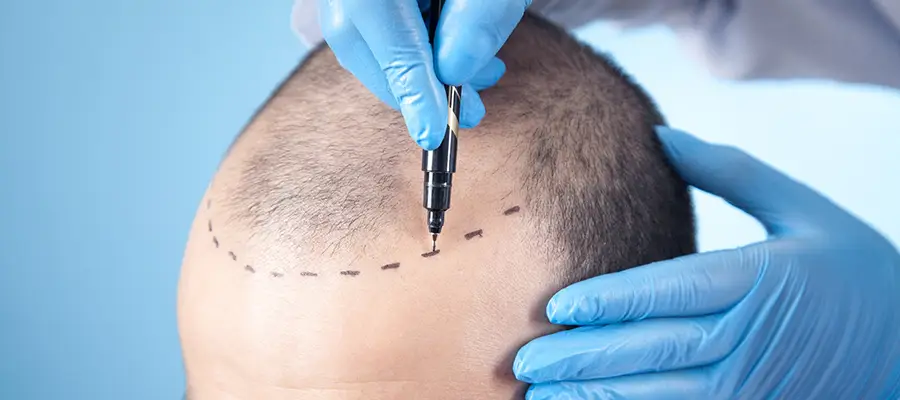
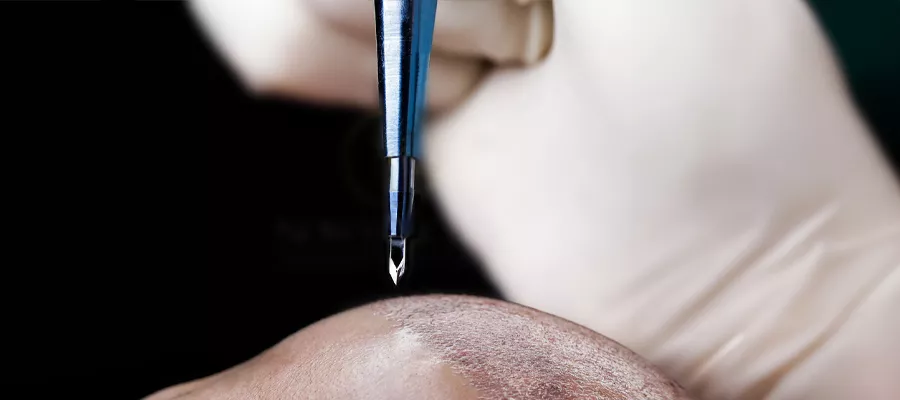
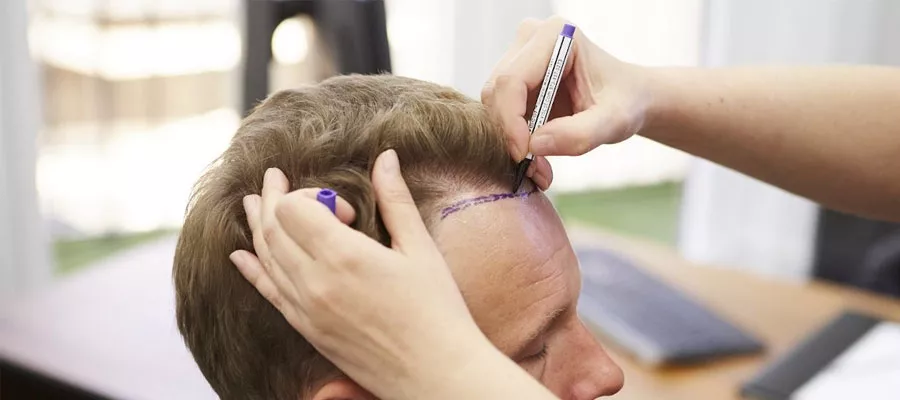
DHI hair transplantation is a technique where hair follicles are directly implanted using a special pen, without the need to create channels.
Direct Hair Implantation (DHI) allows hair follicles to be implanted into the skin with less trauma. This technique reduces the time grafts remain outside the body, keeping the roots healthier. Because placement is done according to the natural exit angle, the results are more aesthetically pleasing. It is generally preferred in narrow areas and regions where hair density is to be increased. Since no capillary channels are opened, the healing process is faster. It offers a high success rate in sensitive areas. Because it involves individual implantation, it is time-consuming and requires expertise.
How is DHI Hair Transplantation Performed?
DHI hair transplantation is performed by implanting grafts, which are extracted with a micro-motor, directly into the scalp using a special pen.
Hair follicles are harvested from the nape of the neck before the procedure. The grafts are placed one by one into special DHI implanter pens and transferred to the bald area. Because no channels are opened, there is less trauma during the procedure. Each graft is carefully implanted according to the natural direction of hair growth. The procedure is performed under local anesthesia, and the patient is comfortable throughout. With this method, the hair follicles remain in the external environment for a very short time. Although the procedure time is longer, the healing process is faster. DHI is developed for maximum naturalness and density.
What is the difference between DHI and FUE?
In the DHI method, no channels are opened, whereas in the FUE technique, channels are opened for the grafts before hair transplantation.
In FUE, grafts are harvested and placed individually into the opened channels. In DHI, the graft is placed directly using a special pen. This difference offers the advantage of less bleeding and faster healing in DHI. The DHI method provides denser and more controlled implantation, but the procedure time is longer. FUE is preferred for quick implantation in large areas. DHI, on the other hand, stands out for density and natural appearance in smaller areas. Both methods are successful; the choice should be made according to the individual situation.
Who is it suitable for?
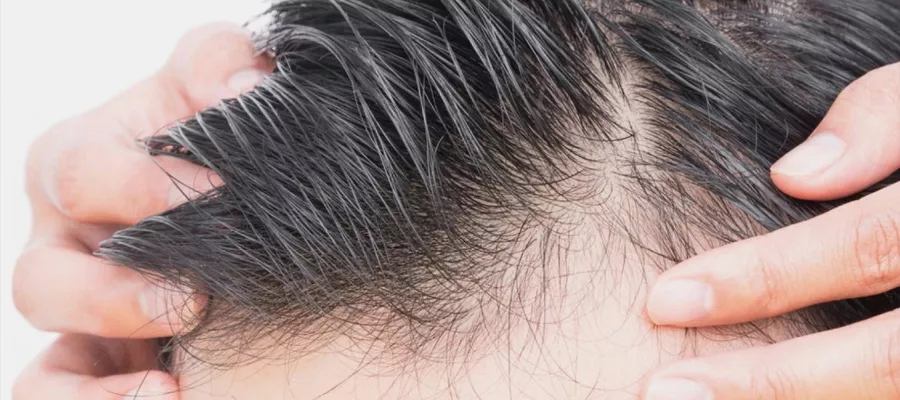
DHI hair transplantation is suitable for individuals who want to increase density in small areas and have a healthy donor area.
It is generally recommended for those who want to define their hairline, thicken their sideburns, or cover sparse areas. Individuals with limited hair loss and sufficient density in the donor area are ideal candidates for DHI. It yields more effective results in individuals without superficial skin problems. It is frequently preferred, especially by women and men who desire a natural look. Although the operation time is longer, the recovery process is faster. The decision should be made after a detailed analysis and expert recommendation.
Who is it not suitable for?
DHI hair transplantation is not suitable for individuals experiencing widespread hair loss and insufficient donor areas.
In cases requiring hair transplantation over large areas, the DHI method may be insufficient in terms of both time and graft capacity. Successful results are difficult to achieve in individuals with insufficient density in the donor area. Furthermore, it is not recommended for individuals with serious skin diseases, active infections, or health problems that affect healing. It may also be risky for individuals with bleeding disorders or weakened immune systems. The individual’s suitability should be clarified through expert evaluation. DHI may not be preferred in every case of hair loss.
Advantages and Disadvantages of DHI Hair Transplantation
DHI hair transplantation offers the advantages of a natural appearance and rapid recovery; however, the long application time and high cost may be disadvantages.
The DHI method allows for more natural angles and denser placement of grafts thanks to the direct implantation of grafts with a special pen. The channel-free application results in less bleeding and faster healing. The shorter exoskeletal period increases the success rate. However, the procedure is longer and requires greater expertise. Furthermore, the cost is higher compared to FUE. All advantages and disadvantages should be evaluated with a specialist to make an individual decision.
Why is DHI Hair Transplantation Preferred for Hairline Improvement?
- The angle and direction of the hairline can be controlled with the utmost precision.
- Thanks to the Choi implanter pen, grafts are placed one by one and in a controlled manner.
- It allows for the creation of a fuller and more natural-looking hairline.
- Hair transplantation can be performed without damaging existing hair.
- Since it doesn’t require canal opening, the risk of trauma is reduced.
What does DHI hair transplantation offer in terms of density?
DHI hair transplantation offers high density by ensuring that grafts are placed closely and in a directional manner, rather than spaced apart.
Because the grafts are implanted directly, channel spacing issues are avoided, and roots can be placed closer together. This ensures a fuller and more homogeneous appearance of the hair, especially in thinning areas. Thanks to DHI, hair grows at its natural density, preventing a sparse appearance. Since the angle and direction of each root are controlled, both aesthetic and structural advantages are achieved. For hair thickening procedures, DHI yields more successful results than FUE. It is an ideal technique, especially for hairline and narrow areas.
How many grafts are used in a DHI hair transplant?
In DHI hair transplantation, typically between 1500 and 3500 grafts are applied; the number varies depending on individual needs.
Because dense implantation is performed in small areas, the number of grafts in DHI is generally lower than in FUE. However, since density is the goal, more careful and precise planning is required. The individual’s degree of hair loss, donor capacity, and aesthetic expectations directly affect the number of grafts. The specialist doctor determines the appropriate number of grafts during the initial examination. Even a dense DHI implantation of 1000 grafts may be aesthetically sufficient. Since each graft contains an average of 2-3 hair strands, the results appear dense. Detailed planning increases the chances of success.
How long does DHI hair transplantation take?
DHI hair transplantation typically takes between 6 and 10 hours; the session duration varies depending on the number of grafts.
Because each graft is placed individually with a special pen, the procedure time is longer than FUE. Furthermore, paying attention to the direction of the roots makes the process technically precise. More time is spent in areas where high density is targeted. The procedure can last from morning until evening. In some cases, it can be divided into two days. The patient is conscious throughout the procedure and can be given rest periods. Although the duration is longer, the natural results and healing advantages are the reasons for choosing this method.
Does DHI Hair Transplantation Hurt?
- DHI hair transplantation is painless during the procedure.
- The procedure is performed under local anesthesia.
- A brief, mild stinging sensation may occur during anesthesia administration.
- Patients usually do not feel pain during the transplantation process.
- You may experience mild stinging or tightness after the procedure.
- This usually subsides within the first 1-2 days.
- Simple painkillers prescribed by the doctor should suffice.
- Severe and prolonged pain is not expected.
When does shock hair loss occur after DHI hair transplantation?
Shock hair loss after DHI hair transplantation usually begins within 2 to 6 weeks and is a temporary process.
Shock shedding is the adaptation process of newly transplanted hair follicles. While the hair strands fall out, the roots remain in place. This is part of the natural hair growth cycle. In the DHI technique, since the grafts experience less trauma, shock shedding may be less noticeable in some individuals. Shedding usually stops within 1-2 months, and new hair begins to grow. There is no need to panic; patience is required, and care instructions should be followed. Full results become apparent in 6-12 months.
Is DHI Hair Transplantation Permanent? Will Hair Loss Continue?
Hair transplanted with DHI hair transplantation is permanent.
Grafts are taken from a donor area that is genetically resistant to hair loss. These hair follicles retain their characteristics in their new location. Shock shedding is normal in the first 1-3 months. Shock shedding does not mean permanent loss. The shed hair will grow back over time.
DHI Hair Transplant Risks and Side Effects
While DHI hair transplantation is generally safe, it can lead to side effects such as infection, redness, and mild swelling.
Crusting and mild pain are normal in the first few days after the procedure. The risk of infection may increase if proper care is not taken. Rarely, graft failure, asymmetry, or unwanted changes in hair direction may occur. Shock shedding may occur within 2–6 weeks but is temporary. Smoking, alcohol use, or poor hygiene can negatively affect healing. Serious complications are rare, and risks are minimized with expert evaluation and procedure in a sterile environment. Follow-up appointments and doctor’s recommendations are key to success.
DHI Hair Transplant Pre-Procedure Preparation Checklist
The DHI hair transplant preparation checklist includes the necessary assessment and lifestyle adjustments for ideal results.
First, a detailed medical examination and hair loss analysis should be performed. Smoking and alcohol consumption should be avoided for 7-10 days prior to the procedure. Blood-thinning medications should be discontinued before the procedure with the doctor’s approval. Healthy eating and sufficient sleep support healing. Comfortable clothing with loose collars should be preferred on the day of the procedure. Hair dyeing or chemical treatments should be avoided. It is also beneficial to review the care products and instructions provided by the doctor before the procedure.
DHI Hair Transplant Prices 2026
In 2026, DHI hair transplant prices generally ranged between 3,000 £ and 8,000 £
Why is picking at scabs risky? How do scabs “remove on their own”?
Removing the scabs can dislodge the grafts; the scabs will fall off naturally within 7-10 days with regular washing.
During the first week, grafts are delicate, and manually peeling off the scabs can cause serious damage. This can lead to graft loss, scarring, or infection. The scabs will soften and fall off naturally over time with gentle washing using lotions and shampoos recommended by your doctor. Shedding usually begins around day 7 and is completely gone by day 10. Patience and following care instructions are important for the healing process.
How long does numbness/tingling last in the donor area?
- Numbness and tingling in the donor area are temporary.
- This sensation is caused by local anesthesia and the activation of nerve endings.
- It’s usually more noticeable in the first few days.
- In most people, it gradually decreases within 2–4 weeks.
- In some cases, this period may extend to 1–3 months.
- Massage, gentle touch, and the healing process will speed up the return of sensation.
Is prolonged redness and tenderness normal? When should you be concerned?
Redness and tenderness are normal for 2-3 weeks; however, if there is inflammation, discharge, or a foul odor, a doctor should be consulted.
Mild redness and tenderness of the skin are expected during the healing process. This may last a little longer, especially in people with fair skin. However, severe redness or pain lasting more than 3 weeks may be a sign of infection. Similarly, if there is a foul odor, yellow discharge, or pus-like formations, a doctor should be consulted immediately. With proper hygiene and medication, this process is usually resolved without problems. For prolonged symptoms, expert consultation is recommended.
When can a haircut be done after a hair transplant (are scissors and clippers separate)?
Hair transplantation should be trimmed with scissors after 3-4 weeks, and shaved with a clipper after 6-8 weeks.
In the first few weeks, the area should not be touched to allow the grafts to fully settle. Careful trimming with scissors can be done from the first month onwards. However, since a hair clipper puts pressure on the scalp, it is recommended to wait 6-8 weeks before using one on the transplant area. Hair clippers can be used earlier on the donor area. Which method to use and when depends on the hair structure and healing process. Timing is important for a natural look and graft health.
Does the sun/solarium affect DHI results; how long is protection necessary?
Sun and tanning beds can negatively affect the results of DHI hair transplantation; it is necessary to protect yourself from direct light for 1 month after the procedure.
UV rays increase the risk of sunburn and can delay healing. They can also make it difficult for hair follicles to implant. Redness, sensitivity, and dryness may increase in the sun-exposed area. This can lead to both graft loss and scarring. While wearing a hat is not recommended for the first two weeks, a thin, loose hat can be worn afterwards. Sunbeds should be avoided for at least 1-2 months after the procedure. It is recommended to avoid UV light until complete healing is achieved.
When can I travel by plane after October?
Air travel is usually possible 2-3 days after a DHI hair transplant; additional time may be needed if there is swelling.
Pressure changes can cause temporary discomfort or increased swelling in the head area. However, this is a low-risk condition and does not pose a problem on short-haul flights. Consulting a doctor before long-haul travel is recommended. Drinking plenty of water before a flight helps reduce swelling. Recovery time and cleansing schedule should also be considered when planning air travel. Travel should not be undertaken without a doctor’s approval.
How many days of leave is reasonable to take when returning to a desk job?
- Usually, 3-5 days of leave is enough to return to a desk job.
- Mild swelling, redness, and tenderness may occur in the first few days.
- These symptoms usually subside significantly within a few days in most people.
- The crusting process can take up to 7–10 days.
- Working in an office environment does not directly damage the grafts.
- However, it is important that the head does not suffer any blows during the first week.
- Spending too much time in front of a screen can increase swelling.