
What is Female Hair Transplantation?
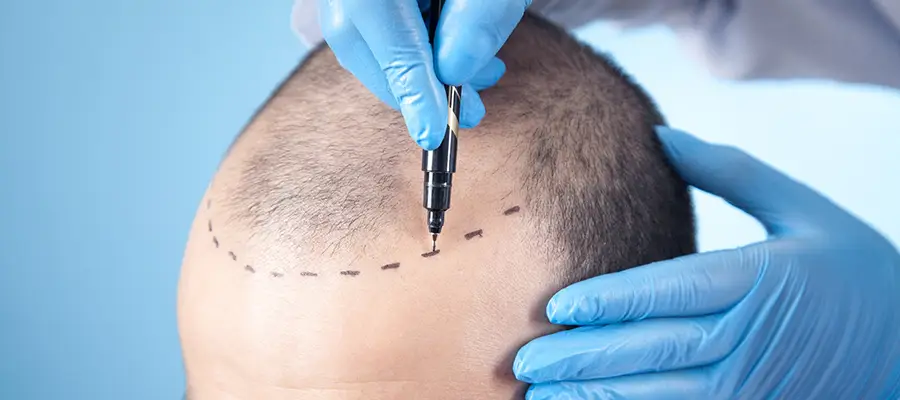
Female hair transplantation is a permanent and natural procedure performed to increase hair density in women experiencing hair loss.
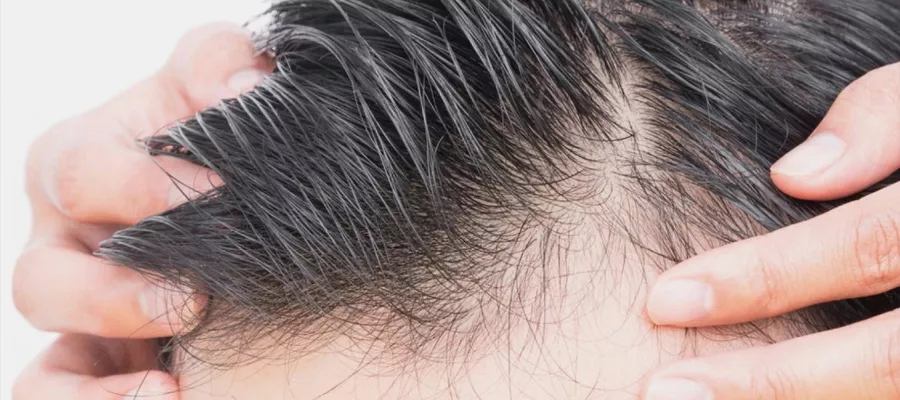
Hair transplantation in women is generally applied to areas with receding hairline, thinning crown, or scarred areas. This procedure improves aesthetic appearance and increases self-confidence. Compared to men, the donor area is selected more carefully in women because the type of hair loss is different. Techniques that do not require shaving the hair offer more suitable options for women. Female hair transplantation yields highly successful results, especially in cases of non-genetic hair loss.
How is female hair transplantation performed?
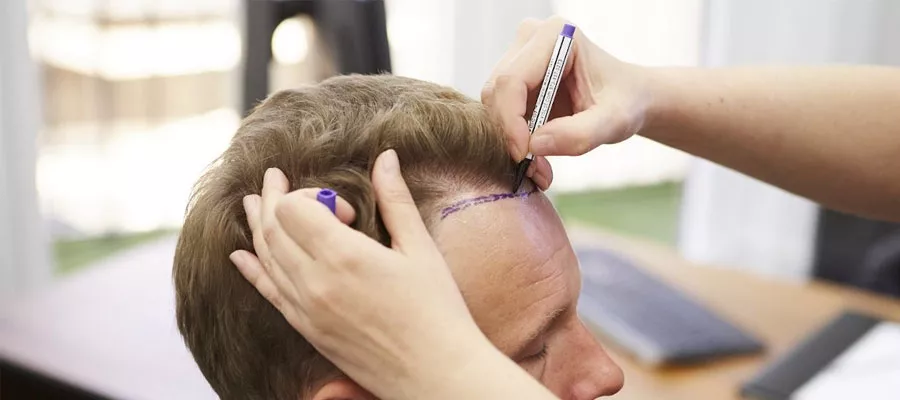
- First, the type of hair loss and the donor area are analyzed in detail.
- In women, the planning is usually done without completely shaving the hair.
- The FUE or DHI method is chosen according to the hair structure and the area to be transplanted.
- Hair follicles are carefully and sparsely harvested from the donor area.
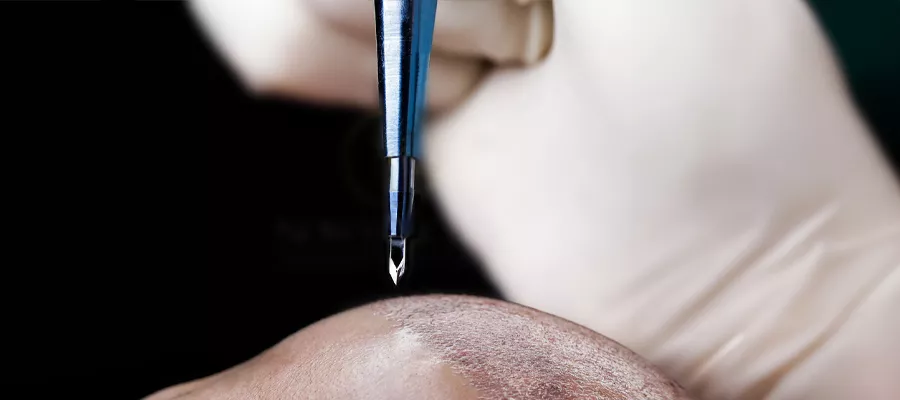
- Micro and controlled incisions are made to avoid damaging existing hair.
- Channels are created to match the natural direction and density of hair growth.
- Grafts are placed at an angle and depth that will provide a natural appearance.
- In what situations is hair transplantation performed on women?
- When localized hair thinning occurs due to genetic reasons
- When there is receding or thinning of the hairline
- If there is significant hair loss in the crown (vertex) area
- In cases of hair loss due to scarring, burns, or trauma.
- When there is congenital thinning in the eyebrows, temples, or hairline
Differences Between Female and Male Hair Transplantation
- Hair transplantation in women is usually performed with an unshaven or partially shaved face.
- For men, a full shave is usually preferred.
- In women, the hairline is designed to be softer and more rounded.
- In men, the hairline is planned to be more defined and angular.
- Hair loss in women is mostly in the form of thinning.
- In men, hair loss progresses in the form of baldness, appearing on the forehead, crown, and baldness.
- For women, preserving existing hair is a priority.
- In men, the goal is to achieve extensive area coverage.
- In women, grafts are distributed more sparser and naturally.
- Higher graft numbers can be applied in men.
Who is it suitable for?
Female hair transplantation is suitable for women experiencing localized hair thinning who have sufficient donor areas.
Effective results are obtained, especially in cases of localized thinning caused by factors such as postpartum hair loss, alopecia areata, burn/surgical scars, or hair pulling habits. Women with asymmetry in their hairline or those wishing to reduce the size of their forehead are also suitable candidates for hair transplantation. If the donor area is sufficient, natural results are achieved with the unshaven DHI technique. Suitability must be determined by a doctor’s evaluation.
Who is it not suitable for?
Women experiencing widespread hair loss and having a weak donor area are not suitable candidates for hair transplantation.
In women with androgenetic (male pattern) hair loss, hair loss can also affect the donor area. In this case, there is a risk of hair loss in the recipient area as well. Furthermore, serious hormonal disorders, active dermatological diseases of the scalp, and autoimmune-related hair loss can reduce the success of hair transplantation. Dermatological treatment may be necessary first. Expert examination and accurate diagnosis are essential for lasting results.
Is hair transplantation possible for women in the vertex (crown) region?
Yes, female hair transplantation can be performed on the vertex (crown) area, but hair direction and density must be carefully planned.
Hair loss in the vertex region of women is generally widespread and diffuse. Therefore, the direction, angles, and density of graft placement are critical for a natural appearance. Vertex hair transplantation is technically challenging, but successful results can be achieved with proper planning and precise techniques like DHI. Donor adequacy directly affects the feasibility of transplantation in this region.
Female Hair Transplant for Forehead/Temple Receding
In women, receding hairline and hairline can be aesthetically corrected by creating a natural hairline through hair transplantation.
Hair loss in these areas is a common aesthetic concern, making hair transplantation one of the most frequently chosen options for women. Transplantation performed using unshaven techniques provides a natural look without disrupting daily life. Temple transplantation can also be planned to reduce the appearance of the forehead. The hairline is determined symmetrically and to suit the face. When performed by experienced specialists, the receding hairline can be permanently closed.
Is Unshaven Female Hair Transplantation Possible?
Yes, hair transplantation for women without cutting or shaving the hair is possible with the DHI method and is quite commonly performed.
Unshaven hair transplantation is an ideal option, especially for women with aesthetic concerns. In this method, only a small area in the donor region is partially trimmed, and the procedure is performed without completely shaving the recipient area. Thanks to the DHI technique, grafts are placed between the hairs at a natural angle. This method increases hair density without disrupting social life and without leaving visible scars. The unshaven technique is quite advantageous for women who want to have a hair transplant without altering their hairstyle.
Female Hair Transplantation: FUE or DHI? Which is More Suitable?
In female hair transplantation, the DHI method is generally more suitable due to its advantages of being a shave-free and precise procedure.
The DHI technique provides a natural look in women because it allows graft placement between hairs without shaving. The FUE method, on the other hand, generally requires shaving and is applied to larger areas. In female patients, DHI provides more aesthetic results for procedures such as hairline correction and forehead reduction. However, FUE may be preferred if the number of grafts is high or the donor area is weak. The decision should be made in consultation with a specialist physician, based on the type of hair loss and expectations.
How is the donor area selected in women?
In women, the donor area is usually chosen from the nape of the neck and the area above the ears, taking into consideration the density and type of hair loss.
Because hair loss in women differs from that in men, it is crucial that the donor area is dense and resistant to hair loss. The nape of the neck is usually the most stable area. However, in some women, genetic hair loss can affect this area as well. In this case, hair thickness, follicle density, and the number of grafts that can be harvested must be analyzed in detail. Choosing the right donor plays a critical role in a successful hair transplant.
How many grafts are needed for a female hair transplant?
In female hair transplantation, the number of grafts required varies between 1000 and 3000, depending on the size of the bald area.
While 1000 grafts may be sufficient for limited areas such as hairline correction, 2000–3000 grafts may be needed for the crown or temple area. The number of grafts required is determined by hair density, level of thinning, and expectations. In women, very dense transplantation is generally not aimed for; the goal is to achieve a natural look and symmetry. Donor area capacity also directly affects this number. The ideal number of grafts should be determined with individual planning.
Is Female Hair Transplantation Permanent?
Female hair transplant results are permanent because the hair follicles taken from the donor area, which are resistant to hair loss, remain for life.
Hair transplantation in women involves taking grafts from areas resistant to genetic hair loss, and these roots remain alive in the new area for life. The initial shock shedding seen in the first few months is temporary, and the true hair growth cycle begins after 3-4 months. New hair becomes visible and looks natural within 6-12 months. In cases where hair loss continues in women, additional supportive treatments can enhance the results. Proper planning and expert application ensure lasting and aesthetically pleasing results.
Risks and Side Effects of Female Hair Transplantation
Female hair transplantation is a low-risk procedure, but side effects such as infection, redness, and mild swelling can occur.
Post-operative crusting and mild tenderness are normal and usually subside within 7–10 days. Improper care or inadequate hygiene can increase the risk of infection. In rare cases, complications such as graft failure, asymmetry, or scarring may occur. Temporary shedding, known as shock shedding, may also be seen in the first few weeks; this is not a cause for concern. Smoking and alcohol consumption can negatively affect healing. Risks can be minimized with a sterile environment and expert application.
When can women use hair dye, blow-dry, and heat treatments after a hair transplant?
It is recommended that women wait at least 4-6 weeks before dyeing or using heat styling tools after a hair transplant.
During the first 4 weeks, chemical dyes and heat treatments can irritate the scalp and negatively affect graft retention. High heat sources such as hair dryers, straighteners, or curling irons should be avoided during this time. Following initial washing and care instructions will accelerate the healing process. After the 6th week, blow-drying and dyeing can be done with controlled heat at low temperatures. Obtaining approval from a qualified doctor at each stage is important.
Female Hair Transplant Prices 2026
In 2026, the cost of hair transplantation for women generally ranges from 3,000 £ to 15,000 £, depending on the technique used and the number of grafts.
How does blood thinner use (such as aspirin) affect the transplant plan?
Blood thinners are usually discontinued 5-7 days before hair transplantation to ensure the safety of the operation.
Aspirin and similar blood-thinning medications can cause excessive bleeding during the procedure. This can complicate graft placement and delay healing. The duration of medication discontinuation should be planned under the supervision of a doctor, and alternative treatments should be recommended by a specialist. The use of blood thinners may lead to a postponement of the hair transplant appointment. The medication list should be discussed in detail during the initial consultation, and the patient should follow the doctor’s recommendations.
How much do cigarettes/hookah affect hair follicle retention?
Smoking cigarettes and hookah constricts the blood vessels that carry oxygen to the hair follicles, significantly reducing the success rate of graft implantation.
Nicotine slows healing and impairs circulation around the graft. This can lead to graft loss, poor growth, and sparse results. It is recommended to abstain from smoking for at least 7-10 days before and after the transplant. Hookah can be even more harmful than cigarettes due to the density of the smoke. Avoiding cigarettes and all tobacco products is critical for a successful hair transplant outcome.
Can hair transplantation be performed during menstruation, and will it affect pain/swelling?
Hair transplantation can be performed during menstruation, but swelling and pain tolerance may vary from person to person.
Due to hormonal changes, some women may experience increased pain perception, swelling, and tenderness. However, this does not prevent the hair transplant procedure. The possibility of the procedure coinciding with the menstrual period should be discussed with the doctor, and adjustments can be made if necessary. The success of the procedure is not affected by the menstrual period, but careful planning is recommended for personal comfort.
Will it be difficult to attend social events like work meetings or school during the first week after October?
During the first week after a hair transplant, crusting and redness may make the appearance uncomfortable in social settings.
The scabs will begin to fall off within 7-10 days, during which time an aesthetically noticeable appearance may develop. This can be bothersome in situations such as work meetings or school. Although redness and swelling are less common with unshaven transplants, a week of social isolation is still recommended. Returning to social life becomes more comfortable as the appearance improves. Wearing a hat can be a temporary solution with your doctor’s approval.
Can scratching/improper brushing after transplantation cause graft loss, and what are the risky actions?
Scratching, rough brushing, and friction within the first 10 days significantly increase the risk of graft loss.
The graft attachment process is delicate, and any actions that could cause trauma should be avoided. Scratching with fingernails, aggressively brushing the hair, rubbing the head against a pillow, or harsh washing can dislodge the grafts. Especially during the first week, washing and care procedures should be performed very gently; appropriate shampoos and lotions should be used. Following the washing protocol recommended by the doctor will ensure healthy graft attachment.
Is increased swelling after a long flight/travel normal, and how can it be reduced?
Long flights or seated journeys after October can increase swelling; this is usually temporary.
Inactivity can cause fluid buildup, especially in the forehead, due to gravity. Keeping the head elevated while sleeping, drinking plenty of water, and increasing circulation with light walks can help reduce swelling. Short-term cold compresses can be applied as recommended by a doctor. If excessive swelling extends to the eyelid, a doctor’s examination is absolutely necessary. Staying active before and after flights is important in reducing swelling.
Does getting pregnant after a hair transplant affect the outcome, and how long should one wait?
Pregnancy hormones can affect hair growth; it’s healthier to wait at least 6 months after a hair transplant.
The first few months after a hair transplant are a period of graft attachment and growth. Hormonal changes during pregnancy can negatively affect this process. In particular, increased estrogen and postpartum hormonal drop can trigger hair loss. Furthermore, some supportive medications that cannot be taken during pregnancy can also limit the success of the transplant. Therefore, it is recommended to wait at least 6 months after a hair transplant and plan accordingly with your doctor.