
What is eyebrow transplantation?
- Eyebrow transplantation is a procedure where a person’s own hair follicles are transferred to areas with thinning or sparse eyebrows.
- This procedure aims to achieve a permanent and natural-looking eyebrow appearance.
- Typically, thin grafts taken from the nape of the neck are used.
- Grafts are placed in accordance with the natural growth direction and angles of the eyebrow.
- The procedure is performed under local anesthesia and is painless.
- Eyebrow loss can be due to genetics, overplucking, scarring, or trauma.
- Eyebrow transplantation can be performed on both women and men.
- When done with the correct technique, the results are perfectly natural.
How is eyebrow transplantation performed?
Eyebrow transplantation is performed by individually transplanting hair follicles taken from the nape of the neck to the eyebrow area.
First, grafts are harvested from the donor area and placed along the brow line at appropriate angles. The direction and angle of the grafts are crucial for a natural look. The procedure is performed under local anesthesia and usually takes 2-3 hours. The transplanted grafts fall out within a few weeks, after which permanent eyebrows begin to grow. Noticeable results are seen after approximately 6 months. Special care and regular check-ups are important after eyebrow transplantation. After the procedure, the eyebrows are shaped to be harmonious with the individual’s facial features.
What are the benefits of eyebrow transplantation?
Eyebrow transplantation offers a permanent solution for achieving aesthetically pleasing and natural-looking eyebrows.
Eyebrow transplantation provides effective results in cases of eyebrow loss, sparse appearance, or shape irregularities. It offers a natural alternative, especially for those dissatisfied with permanent makeup. It balances facial expressions and improves a person’s aesthetic appearance. Eyebrow transplantation is also ideal for those who frequently pluck their eyebrows and experience hair loss. The transplanted grafts are permanent and grow like natural hair. The procedure results in natural-looking, dense, and symmetrical eyebrows.
Who is it suitable for?
Eyebrow transplantation is suitable for anyone experiencing eyebrow loss, having sparse eyebrows, or simply wanting a more aesthetically pleasing appearance.
Individuals with sparse eyebrows due to genetic reasons, or those experiencing eyebrow loss due to trauma or accidents, can benefit from this procedure. It is a permanent solution, especially for those who have excessively plucked their eyebrows in the past. It can be applied to both men and women. Results are more successful for individuals with sufficient hair follicles in the donor area. Since it is performed under local anesthesia, anyone in good general health is a suitable candidate for the procedure. It is preferred for individuals over 18 years of age.
Who is it not suitable for?
Eyebrow transplantation is not suitable for individuals with active skin diseases or those who do not have sufficient donor hair.
It may also pose a risk for individuals with chronic diseases such as diabetes, blood clotting disorders, and serious heart conditions. It is also not recommended for individuals who do not have realistic psychological expectations. If there are active infections, wounds, or skin problems such as eczema in the eyebrow area, the procedure should be postponed. If there are not enough healthy hair follicles in the donor area, the desired result cannot be obtained. The procedure should also not be performed during pregnancy and breastfeeding without the approval of a physician. After expert evaluation, it is decided whether the person is suitable for the procedure.
What Causes Eyebrow Loss?
- Genetic predisposition and family factors
- Excessive eyebrow plucking and incorrect hair removal practices.
- Hormonal imbalances (such as thyroid diseases)
- Stress, intense anxiety, and sudden weight loss.
- Skin diseases and infections in the eyebrow area.
- Trauma, burns, or scar formation.
Eyebrow Transplant Pre-Procedure Design: Eyebrow Shape According to Face Type
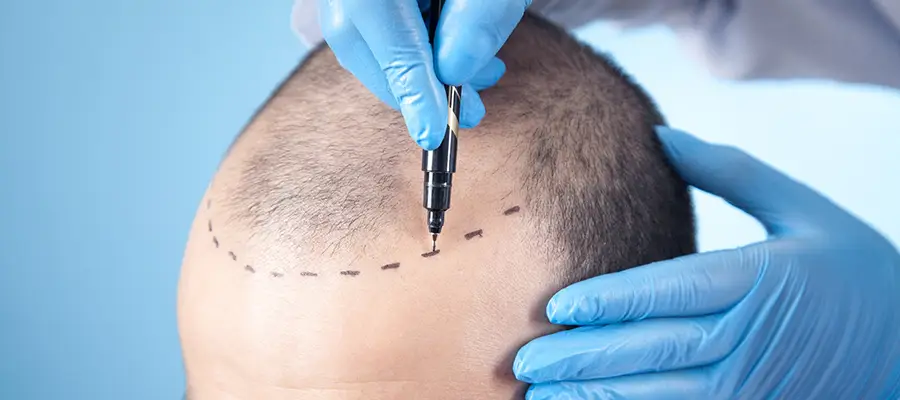
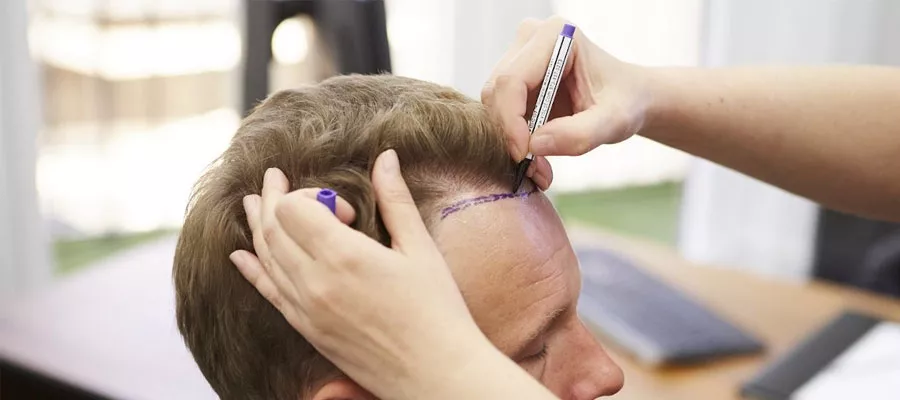
Before eyebrow transplantation, a design is created to determine the eyebrow shape that best suits the individual’s face type and expression.
Balanced eyebrows are preferred for oval faces, while slightly lifted eyebrows make round faces appear longer. For square faces, softly arched eyebrows balance harsh features. For long faces, straighter eyebrows offer an ideal proportion. Eyebrow design is shaped according to facial symmetry, eye structure, and the individual’s eyebrow shape. This planning is crucial for a natural and aesthetic look after transplantation. A proper analysis by experts yields successful results in terms of both eyebrow density and direction.
Which Technique is Used for Eyebrow Transplantation?
Eyebrow transplantation is generally performed using microsurgical techniques with the FUE (Follicular Unit Extraction) method.
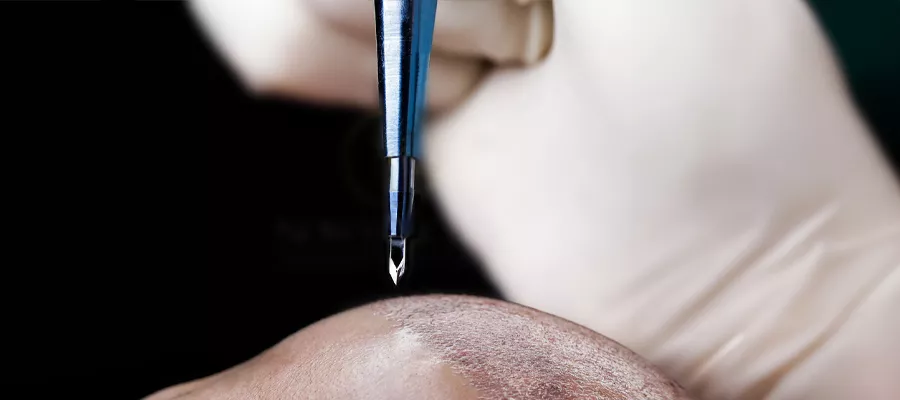
In the FUE technique, hair follicles are individually extracted from the nape of the neck and placed at angles that match the natural direction of the eyebrow. This method leaves no scars, has a short healing time, and provides natural-looking results. The channel creation process is done with micro-tips, allowing for controlled eyebrow shaping. Because each follicle is carefully placed, eyebrow density reaches the desired level. While DHI techniques are rarely used, FUE is the most preferred method with a high success rate.
Is eyebrow transplantation performed under local anesthesia?
- Yes, eyebrow transplantation is performed under local anesthesia.
- The eyebrow and donor area are numbed before the procedure.
- A brief, mild tingling sensation may occur during anesthesia.
- Once numbness is achieved, the patient feels no pain.
- The person remains awake throughout the procedure and completes it comfortably.
- General anesthesia is not required.
How long does eyebrow transplantation take?
Eyebrow transplantation takes between 2 and 4 hours on average, depending on the individual’s needs.
The procedure time can vary depending on the number of grafts to be transplanted and the detail of the eyebrow design. The process of extracting hair follicles from the donor area and placing them in the eyebrow area requires meticulous attention. Because microsurgical techniques are used, the procedure is detailed but proceeds in a controlled manner. In a transplant performed by expert doctors, patient comfort is prioritized regardless of the duration. The recovery process is rapid, and the person can be discharged the same day.
Does eyebrow transplantation hurt?
Since eyebrow transplantation is performed under local anesthesia, no pain is felt during the procedure.
After anesthesia is administered, only slight pressure may be felt, but this is not bothersome. There may be minimal sensitivity after the procedure, but this is temporary. It is usually easily controlled with creams or painkillers recommended by the doctor. The recovery process after eyebrow transplantation is also comfortable. With proper care, natural and lasting results are achieved without pain.
When can makeup be applied after eyebrow transplantation?
It is generally recommended to start applying makeup 10 to 14 days after eyebrow transplantation.
Because the skin is sensitive during the healing process, the eyebrow area should not be touched in the first few days. During this period, makeup products can increase the risk of infection and delay healing. Makeup can be applied after the scabbing and redness have completely subsided, with the approval of a doctor. When choosing makeup products, opt for non-irritating, mineral-based, and hypoallergenic products. Attention to hygiene rules is essential for long-term results.
Is Eyebrow Transplantation Permanent?
Yes, eyebrows obtained through eyebrow transplantation are permanent and provide long-lasting, natural results.
After eyebrow transplantation, the transplanted hair follicles regrow after falling out, making the results permanent. This procedure permanently fills in genetically sparse eyebrows or areas of eyebrow loss. Because natural hair follicles are used, the resulting eyebrow hairs grow like normal hair and can be cared for. New hairs become noticeable in the first few months, and full results are seen within 6-12 months. The permanent result is maintained for many years, depending on the individual’s lifestyle and care. Therefore, eyebrow transplantation is an effective and permanent aesthetic option, unlike temporary solutions.
Eyebrow Transplant Risks and Side Effects
Although eyebrow transplantation is generally safe, side effects such as infection, swelling, and redness can occur.
Mild pain, swelling, and crusting are common in the first few days after the procedure. The risk of infection can increase if proper care is not taken. Some individuals may also experience temporary numbness or mild sensitivity in the eyebrows. Although rare, problems such as graft failure or uneven growth may occur. While the risk of asymmetry is low, it can be observed in inexperienced procedures. These effects are generally temporary and disappear over time with proper healing. Expert medical supervision and adherence to hygiene rules minimize risks and ensure successful results.
When does asymmetry correct itself after eyebrow transplantation?
Mild asymmetry after eyebrow transplantation usually corrects itself within 3 to 6 months.
Initially, swelling, crusting, and the pattern of new hair growth may create asymmetry. This is part of the normal healing process. As hair follicles settle, the brow line will become more symmetrical. By about 6 months, most patients will notice a significant reduction in asymmetry. Results will be fully established and final symmetry will be seen within 9 to 12 months. If noticeable differences persist, minor adjustments can be made under the supervision of a doctor. Patience and regular check-ups ensure smooth progress of the results.
Eyebrow Transplant Prices 2026
In 2026, eyebrow transplant prices will vary depending on the clinic, the technique used, and the number of grafts.
If there is a “direction” error in eyebrow transplantation, is it possible to correct it?
Yes, if a directional error occurs during eyebrow transplantation, correction is possible with a second procedure.
Grafts placed at the wrong angle can be readjusted or corrected by laser removal if necessary. Such errors are usually seen in inexperienced procedures. Complete healing is required before correction, typically 6-12 months. New grafts placed at the correct angle restore a natural eyebrow appearance. When the correction procedure is carefully planned, aesthetically successful results can be achieved. Therefore, the initial graft procedure must be performed by experts.
After an eyebrow transplant, do the transplanted hairs initially grow upright, or do they lie flat over time?
Yes, after an eyebrow transplant, the hairs initially grow upright, but over time they adapt to the natural direction of the eyebrows.
In the first few months, the hair follicles taken from the scalp tend to grow vertically until they adapt to the eyebrow area. However, this is temporary. With regular brushing, care, and guidance, eyebrow hairs will soften over time and begin to grow horizontally. On average, the direction of the eyebrows will become more natural within 6 to 12 months. Patience and following the care routine recommended by your doctor will speed up this process. If necessary, eyebrows can be reshaped with corrective sessions.
Is it risky to wear glasses or touch my eyebrows during the first 10 days?
Yes, wearing glasses and touching the eyebrows for the first 10 days after eyebrow transplantation can increase the risk of infection.
During this process, crusting and sensitivity will occur in the transplanted area. Wearing glasses can put pressure on the eyebrow area, causing the grafts to shift. Similarly, rubbing or touching the eyebrows with your hands will delay healing and increase the risk of infection. Contact lenses can be preferred instead of glasses for the first 10 days. The eyebrows should not be touched, the area should be kept clean, and the care instructions recommended by your doctor should be strictly followed.
Will contact lens use or eye drops cause problems after a transplant?
Wearing contact lenses after eyebrow transplantation is generally safe, but using eye drops requires caution.
Contact lenses do not cause problems as long as the eyebrow area is not touched during use. However, when applying eye drops, it is important to prevent the drops from touching the eyebrows due to the position of the head. If eye drops are necessary, the eyebrow area should be carefully protected and avoided. You must inform your doctor about both contact lens and eye drop use. By taking extra care in the first few days, both eye health and the healing of the transplant area can be ensured.
When is it safe to exercise and sweat after an eyebrow transplant?
Sports and excessive sweating are generally safe 10-14 days after eyebrow transplantation.
It is important to avoid strenuous physical activity for the first week, as sweating can cause graft displacement and increase the risk of infection. Low-intensity exercises, such as light walking, can be done after a few days with your doctor’s approval. However, activities that cause facial sweating, such as sports, saunas, and steam rooms, should be postponed for at least two weeks. It takes approximately 10 days for the grafts to fully integrate. By carefully managing this period, you can speed up the healing process and achieve successful results.
At what month will it be clear whether a touch-up (second session) is needed?
The need for touch-ups is usually assessed 6 to 12 months after eyebrow transplantation.
Although the growth time of the first transplanted grafts varies from person to person, full results become apparent on average within 1 year. If there are gaps, directional problems, or insufficient density after this period, a second session may be planned. Touch-up procedures are performed to provide natural fullness to areas where the initial transplant results were insufficient. The specialist doctor will clearly determine this need during the check-ups. Touch-up procedures performed at the right time improve the overall quality of the appearance.
Will there be “graying/color difference” in the eyebrows after eyebrow transplantation?
Although rare, color differences or whitening may be observed in the transplanted areas after eyebrow transplantation.
This condition is usually temporary and improves as the skin heals. In some individuals, the hair structure and color may differ because the transplanted follicles were taken from the surrounding hair. Over time, this blends with the surrounding eyebrows. If a noticeable color difference persists, it can be balanced with aesthetic procedures such as coloring or eyebrow lamination. Permanent color differences are very rare and minimal in transplants performed with the correct technique. With expert supervision, this can be easily managed.