
What is Afro Hair Transplantation?
Afro hair transplantation is a type of hair transplantation performed using special techniques to address hair loss in individuals with naturally curly hair.
This hair transplant method is specifically planned to accommodate the directional and structural differences of curly hair follicles in the skin. Because Afro hair is generally curly, it requires experience in both donor harvesting and channel creation. A more delicate approach is needed compared to classic techniques because grafts can be damaged if harvested incorrectly. Afro hair transplantation is ideal for individuals who want to correct their hairline, fill in sparse areas, or increase density. When done correctly, it offers natural and lasting results. Therefore, an expert and experienced team should be chosen.
How is Afro Hair Transplantation Performed?
- An analysis specific to Afro hair structure is performed, and the curl direction of the hair follicles is determined.
- The donor area is usually the nape of the neck, and the exit angles of the grafts are evaluated.
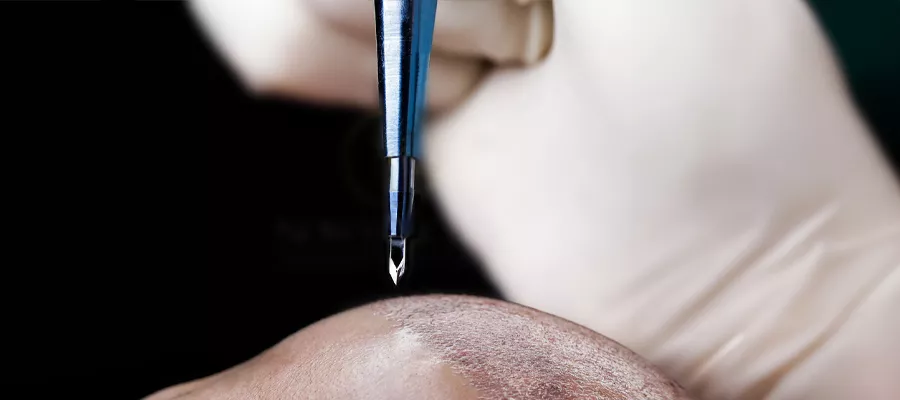
- Either the FUE method or the manual FUE method is preferred; the procedure is slow and controlled.
- Because Afro hair follicles are curved even under the skin, the grafts are harvested at a specific angle.
- The harvested grafts are checked one by one, and those that are undamaged are separated.
Who is it suitable for?
Afro hair transplantation is suitable for individuals with curly hair who are experiencing hair loss and have healthy, sufficient donor areas.
Individuals of Afro descent experiencing genetic hair loss, thinning, or scarring-related hair loss may opt for this procedure. Successful results are obtained in individuals with sufficient donor area and no active skin disease on the scalp. It provides natural results, especially for individuals who want to regain their hairline or increase hair density. To preserve the curly structure, the procedure must be performed by experienced specialists. If the patient is suitable in terms of general health, Afro hair transplantation can be safely performed.
Who is it not suitable for?
Afro hair transplantation is not suitable for individuals with insufficient donor area, active skin disease, or poor general health.
Because Afro hair has a curly structure, extracting and implanting grafts is challenging. Therefore, successful results may not be possible in individuals with weak or bald donor areas. Additionally, any active infections on the scalp, such as fungal infections or eczema, should be treated beforehand. Conditions such as blood clotting disorders, uncontrolled diabetes, or heart disease also increase the risk. A comprehensive health assessment should be conducted before hair transplantation, and suitable candidates should be carefully selected.
Afro Hair Transplantation: FUE or DHI? Which is Preferred and When?
- Individuals who do not have sufficient and healthy hair follicles in the donor area
- Those whose active hair loss is not under control
- Those with uncontrolled chronic conditions such as diabetes and clotting disorders
- Those with serious skin conditions or active infections
- Individuals prone to keloid (excessive scarring) formation
- Those who have unrealistic expectations from hair transplantation
- Patients undergoing chemotherapy or radiotherapy
- People with a general health condition that the doctor deems risky for surgery.
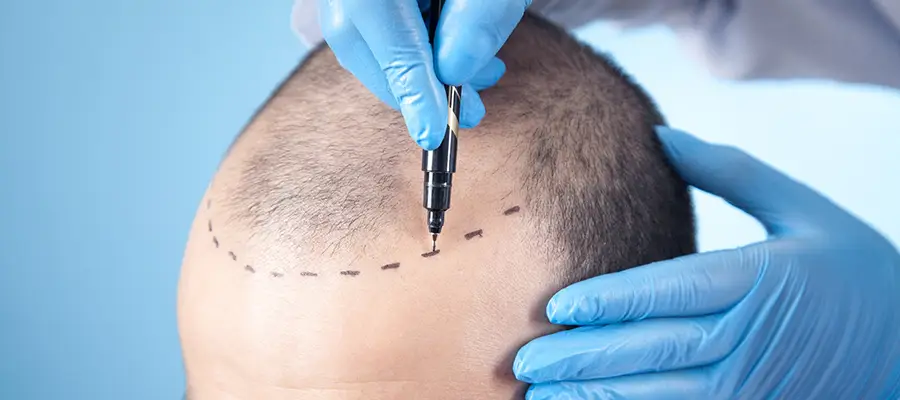
How should the hairline be designed in Afro hair transplantation?
In Afro hair transplantation, the hairline should be planned with a natural and soft curve.
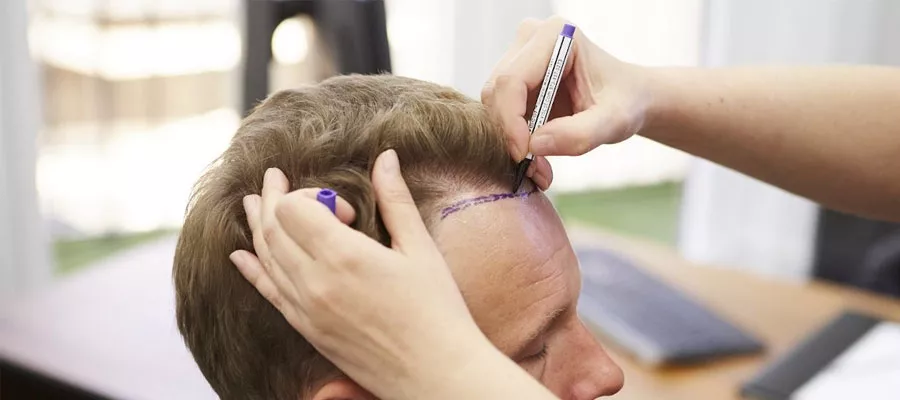
In curly hair, the natural hairline is generally designed to avoid harsh lines. An Afro hairline should be harmonious with facial features, slightly wavy, and symmetrical. To ensure a natural look, facial proportions, forehead height, and existing hair density are evaluated before determining the hairline. Also, since each individual’s curl direction is different, the angle at which the grafts are placed should be consistent with the natural direction of hair growth. Hairline design is one of the most critical steps in hair transplantation and should be personalized by an experienced surgeon.
Angle and Direction Planning for a Natural Look in Afro Hair
In Afro hair transplantation, for a natural look, the angle and direction of the grafts should be planned to match the natural curl of the hair.
Because curly hair follicles are deep and have a curved structure, their exit angles are also different. Therefore, the angles must be carefully adjusted during the channel opening process, and the natural curl direction of the hair must be preserved. Incorrect angle planning can lead to the transplanted hairs not being in the same direction as the natural hairs. Thanks to correct angle and direction planning, both density and naturalness are optimized in afro hair transplantation. This planning particularly enhances aesthetics in the hairline and frontal areas.
How many grafts are needed for an Afro hair transplant?
Afro hair transplantation typically requires between 1,500 and 4,000 grafts.
The number of grafts required varies depending on the extent of hair loss, the width of the hairline, and the desired density. Since curly hair generally offers greater volume per graft, sufficient density can be achieved with fewer grafts. However, in cases of extensive baldness or increased density, around 3,000–4,000 grafts may be needed. The exact number of grafts is determined through expert assessment and donor area analysis. When the number of grafts is planned correctly, afro hair transplant yields much more aesthetically pleasing results.
Risks and Complications of Afro Hair Transplantation
Risks after an Afro hair transplant may include infection, redness, swelling, and graft failure.
Due to the nature of curly hair, grafts are deep and curved, increasing the risk of trauma during harvesting and placement. Therefore, expert experience is crucial. Mild redness and crusting are normal in the first few days, but failure to adhere to hygiene rules can lead to infection. Furthermore, incorrect channel opening angles can disrupt the natural appearance or cause directional errors. Complications such as bruising, temporary itching, and mild swelling usually resolve quickly in most cases. Expert planning and post-operative care minimize these risks.
Afro Hair Transplant Prices 2026
In 2026, afro hair transplant prices generally range between 1,000 £ and 7,000 £
This price range varies depending on the number of grafts to be transplanted, the technique chosen (FUE, DHI), the doctor’s experience, and the clinic’s location. Since Afro hair transplantation requires precise planning for curly hair, an expert team and a longer procedure time are factors affecting the price. Some clinics offer special packages that include a preliminary examination, follow-up, and medication package in the price. When researching prices, it’s important to focus not only on the cost but also on the potential for natural results and choosing a doctor with good references.
How many days does the healing process take, and when do the scabs fall off?
- Sensitivity, mild swelling, and redness may occur during the first 3 days after hair transplantation.
- Returning to daily life is usually possible within 3–5 days.
- Crusting begins in the planted area within the first 2–3 days.
- The scabs usually fall off on their own in 7-10 days.
- The transplanted area is considered to have largely recovered after a few days.
- The donor area recovers within 5–7 days in most people.
When does shock hair loss occur, and when does new hair grow?
Shock hair loss after Afro hair transplantation usually occurs within 2–6 weeks, and new hair grows back in 3–6 months.
In the first few weeks, transplanted hair strands may temporarily fall out; this “shock shedding” is normal and does not require concern. After this process, the hair follicles solidify under the skin, and new hair begins to grow from the 3rd month onwards. Significant density is seen in the 6th month, while the full result is achieved in 9-12 months. Since Afro hair is curly, time and patience are needed for the growth direction and density to look natural. Proper follow-up and care support healing.
Is Afro Hair Transplantation Permanent, or Will Hair Fall Out Again?
Afro hair transplantation is permanent; the transplanted hair will not fall out because it is genetically resistant to hair loss.
Hair follicles taken from the donor area are transplanted to the target area while preserving their genetic characteristics, ensuring lifelong permanence. However, localized hair loss may occur due to improper care, trauma, or skin diseases. Therefore, the procedure should be performed by experienced specialists, and the healing process should be carefully monitored. Furthermore, since genetic hair loss can continue in natural hair, the transplant plan should be tailored accordingly. Regular check-ups and care are essential for healthy results.
Can those prone to keloids undergo Afro hair transplantation?
In individuals prone to keloids, afro hair transplantation should be carefully planned and a dermatological evaluation should be performed beforehand.
Keloids are thick scar tissue that develops as a result of an overreaction to skin trauma. Individuals with Afro-haired hair may have a higher risk of developing this condition. Therefore, skin structure analysis is essential before hair transplantation. While controlled and layered procedures can be applied in cases of mild keloid formation, transplantation may not be recommended for those with a high risk of keloids. The risk can be reduced with protective treatments and special protocols recommended by the doctor. Healthy results are possible with proper planning.
How can I reduce the risk of infection and scarring?
Following hygiene rules and adhering to your doctor’s recommendations significantly reduces the risk of infection and scarring.
In the first few days, it’s very important to avoid touching the scalp, keep your pillowcase clean, and protect the treated area from the sun. Antibiotics and aftercare lotions should be used regularly, and follow-up appointments should not be missed. Also, scabs should not be picked at until they fall off on their own. Vitamin supplements, a balanced diet, and avoiding smoking also speed up healing. All these steps minimize the risk of scarring and infection.