
What is Body Hair Transplantation?
Body hair transplantation involves transferring body hair from the nape of the neck to the scalp if there is insufficient hair growth in that area.
In this procedure, hair follicles taken from areas such as the chest, back, beard, or legs are transplanted to hairless areas. Body hair does not grow as long and thick as scalp hair, so it is usually used to add density to the crown area. It is not often preferred in aesthetic areas such as the hairline. The grafts must be selected by an experienced specialist to ensure compatibility. For natural results, body hair should be considered as a supportive treatment for hair transplantation.
Who is a suitable candidate for body hair transplantation?
Body hair transplantation is suitable for individuals with insufficient donor areas, especially those with a low number of grafts in the nape of the neck.
Successful results can be obtained in individuals with strong and dense hair in the beard, chest, or back area. It is preferred as an alternative source in patients who have previously undergone hair transplantation and have depleted donor areas for a second session. Compatibility is higher in individuals with hair of a thickness and curliness close to their natural hair structure. It is a suitable option if density is the primary goal rather than aesthetic contour.
Who is not a suitable candidate for body hair transplantation?
Body hair transplantation is not suitable for individuals with fine, sparse body hair.
It is also risky for individuals with highly sensitive skin, those prone to keloid formation, or those with systemic diseases. Hair transplants may not look natural in hair types that differ significantly from the natural hair (e.g., very curly or light-colored). It is not preferred because it can create inconsistencies in aesthetic areas, especially the hairline. Therefore, a detailed analysis and expert evaluation are necessary.
How is Body Hair Transplantation Performed?
Body hair transplantation involves individually implanting grafts taken from other parts of the body into areas without hair.
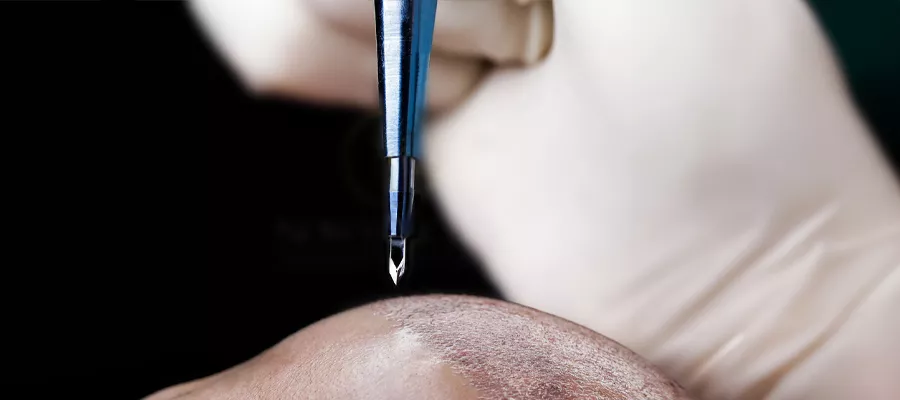
First, donor areas such as the beard, chest, or back are numbed with local anesthesia. Then, hair follicles of the appropriate thickness are extracted using the FUE technique. The collected grafts are kept in a special solution and then placed into the scalp at natural angles. The crown and back areas are particularly preferred so that body hair blends with the scalp. The healing process is similar to classic hair transplantation, but the growth rate and structure may differ.
From which areas can body hair be transplanted?
Body hair transplantation is usually performed using hair from the beard, chest, back, arms, and legs.
The most preferred donor areas are beard and chest hair because their thickness is closer to the hair follicles. Back and leg hair are used in limited cases because they can be finer and curlier. Body hair is selected considering its color, texture, and growth angle to ensure aesthetic harmony. A specialist doctor analyzes and determines the most suitable body area. The goal is to increase hair density naturally.
Beard Hair Transplantation
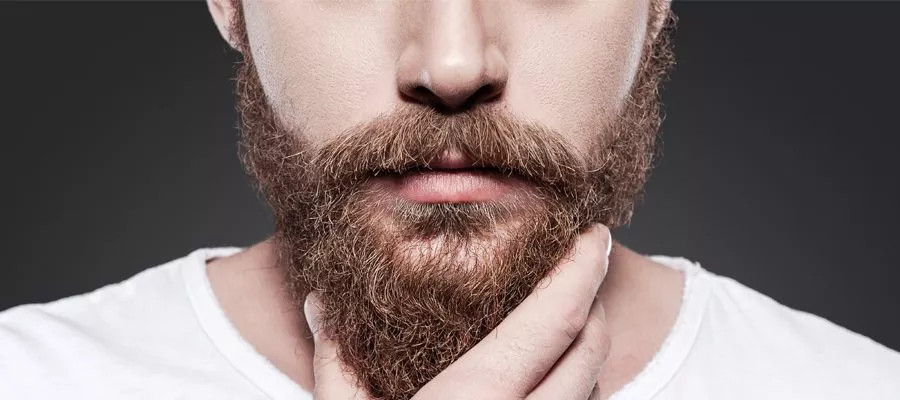
Beard hair, due to its thickness and durability, is the most effective body hair donor for hair transplantation.
Especially if the nape donor area is insufficient, beard hairs are used to add density to areas outside the front hairline. Beard hairs have a strong root structure, which increases the success rate after transplantation. The graft harvesting process is comfortable because the facial area is easily accessible. The straight and thick structure of beard hairs, when blended with the hair, yields successful results. It is preferred in the crown and back areas, not along the aesthetic lines.
Hair Transplantation Using Chest Hair
Chest hair and body hair are a frequently preferred and important source used in hair transplantation to increase hair density.
Grafts taken from this area yield successful results if they are close to the thickness of a hair strand. However, the growth rate is slower than that of hair and they usually remain short. Therefore, chest hair is suitable for transplantation in the crown or middle areas. If placed at natural angles, it creates a fuller effect. It is applied to supporting areas rather than the aesthetic line. Although not preferred as often as beard hair, it provides donor diversity.
Hair Transplantation Using Back Hair
Back hair and body hair are less preferred donor areas for hair transplantation, but in some cases they can be complementary donors.
Back hair, which is generally fine and curly, may have poor blending properties with the scalp. Therefore, it is used in areas requiring camouflage, such as the crown of the head. Back hair should be analyzed before transplantation and selected according to its growth direction and thickness. It can be considered as a supportive graft if the nape and beard donor areas are insufficient in cases requiring a large number of grafts. Although its use is limited, it is effective in suitable cases.
Is hair transplantation possible using leg hair?
- Yes, hair transplantation can be done using leg hair, but it is not the first choice for every patient.
- Leg hair is often used when donor hair is insufficient.
- It is structurally thicker than hair and has a different growth cycle.
- Therefore, it is often preferred for hilltop areas or for increasing density.
- Not suitable for the front hairline.
- Hair transplanted using leg hair may grow slower than hair from the scalp.
- When used in the right area and within limited limits, supportive results can be obtained.
Differences Between Body Hair Transplantation and Traditional Hair Transplantation
Body hair transplantation, unlike classic hair transplantation, is performed using grafts taken from areas outside the nape of the neck.
In classic hair transplantation, the donor area is the nape of the neck, while in body hair transplantation, areas such as the chest, beard, or back are used. Body hair does not grow as long and thick as scalp hair, so it is often preferred for adding fullness to areas like the back of the head. While classic hair transplantation is more advantageous in terms of natural appearance, body hair is considered a supporting method. The success of both methods is directly proportional to graft selection and expertise.
Advantages and Disadvantages of Body Hair Transplantation
Body hair transplantation provides an additional graft source for individuals with insufficient donor areas, but it has limitations in terms of naturalness.
Its advantage is that it adds fullness to hairless areas in individuals who need additional grafts. It offers an alternative, especially in second sessions or in cases requiring dense transplantation. Its disadvantage is that the hairs are different in structure from scalp hair, grow short, and may not look natural. It is not suitable for the front hairline. Beard and chest hair are the most efficient body donors. If the right area is chosen for a suitable patient, it will be beneficial.
How many grafts can be used in body hair transplantation?
In body hair transplantation, an average of 500 to 3000 grafts can be obtained, depending on donor density.
The beard area is the body area from which the most grafts can be taken; typically between 1000 and 1500 grafts. The chest and back areas can provide 500-1000 grafts depending on hair growth. However, graft quality may not be as high as that of the scalp, so it’s important to focus on quality rather than quantity. Body and nape grafts can be combined if necessary. The number of grafts to be taken will be determined before the procedure through an expert assessment.
Body Hair Transplant Prices 2026
In 2026, the average price for hair transplantation using body hair ranged from 3,000£ to 8,000 £
Is hair transplantation using body hair successful?
Yes, hair transplantation using body hair can take hold and yield successful results in certain cases.
Especially when the nape donor area is insufficient, beard, chest, or back hair can be used as an alternative source. If properly selected, these hairs can add fullness and density to bald areas. However, because body hair has a different structure than scalp hair, it is generally used in the back and crown areas rather than the front hairline. While the success rate is generally higher with beard hair, the compatibility may be slightly weaker with fine body hair. With proper planning and expert evaluation, aesthetic and permanent results can be obtained from hair transplantation using body hair.
What is the success rate in body hair transplantation?
The success rate in body hair transplantation is generally between 60% and 80%, which is slightly lower than that of hair donor hair.
This rate can vary depending on the chosen body area, hair quality, and the surgeon’s experience. Beard hair tends to have a higher growth rate compared to other body areas because it is thicker and stronger. Growth may be slightly lower with chest or back hair because its structure differs from hair. Body hair generally takes root after being transplanted to a hairless area, but the growth rate and density differ from hair. With correctly selected donor areas, the growth rate can be optimized.
Does body hair grow differently than head hair?
- Yes, body hair grows differently than head hair.
- The growth (anagen) phase of body hair is shorter than that of hair.
- Therefore, their elongation rates are slower and their maximum lengths are limited.
- They largely retain these biological characteristics even after being planted.
- They are not expected to grow as long as hair.
- Therefore, they are generally not preferred at the front hairline.
- It is more suitable for areas where hills or density increase are desired.
- With proper planning, supportive results can be achieved.
Can body hair experience shock shedding after a hair transplant?
Yes, temporary shock hair loss can also occur after body hair transplantation, and this is a normal process.
Shock shedding usually occurs within 2–6 weeks after transplantation and is temporary. During this process, the transplanted hair follicle remains in place, but the hair shaft on top of it falls out. New hairs begin to grow from approximately the 3rd month onwards. Shock shedding is less common in beard hair; it may be slightly more common in chest or back hair. This cycle is a natural part of hair transplantation and does not mean permanent shedding. Patience is required and the process should be monitored.
Will the hair become coarse after a body hair transplant?
Yes, thick body hairs, like those in a beard, can feel coarser and more noticeable after a hair transplant.
Beard hair, in particular, is thicker than scalp hair, which can create a different texture sensation in the transplanted area. While chest or back hair is generally finer and softer, a structural difference is noticeable compared to scalp hair. This can make a difference in terms of aesthetic appearance or hair styling. However, this stiffness may soften over time as the hair grows. Choosing the right donor area is important to avoid unwanted texture differences.
Can body hair have directional problems after hair transplantation?
Yes, if body hair is positioned differently than its natural direction, a directional problem can occur.
The natural growth angles of beard, chest, or back hair differ from those of scalp hair. If this angle is not taken into account during transplantation, the resulting hairs may grow vertically or in the opposite direction. This can be aesthetically displeasing and make styling difficult. Experienced surgeons minimize this problem by placing grafts at appropriate angles and according to natural directions. Directional alignment is especially critical in the frontal areas. Planning prevents such complications.
Can body hair be used for hair transplantation in the frontal area?
No, body hair is generally not recommended in aesthetically pleasing areas like the hairline.
Body hair, being structurally different from scalp hair, cannot provide a natural look in the front hairline. While beard hair is slightly closer in structure, it can appear thick and noticeable when used at the hairline. Therefore, body hair is preferred to increase density in the crown and back areas. For aesthetic harmony in the front hairline, a nape donor should be preferred. If a natural look is desired, the thickness and direction of the hairs play a critical role.
Is body hair suitable for hair transplantation for the crown area?
Yes, body hair transplantation is a suitable option for adding density to the crown area.
Especially if there is insufficient donor hair from the nape of the neck, beard, chest, or back hair can be used as a supporting graft in the crown area. Since the crown area is not as critically important aesthetically as the hairline, the difference in structure is less noticeable. Body hair transplanted at the correct angle and direction adds volume to the area. However, body hair may not grow as long as scalp hair; therefore, it should only be considered for increasing density.
Does body hair transplantation increase hair density?
Yes, body hair transplantation is an effective supportive method for increasing hair density.
In individuals with limited donor space, body hair can provide additional fullness to the transplant area. It creates a volumizing effect, especially in the crown and back areas. Beard hair, with its thick structure, can increase the feeling of density. However, these hairs are not used in aesthetically pleasing frontal areas. They only provide natural results when applied for support purposes and under expert supervision. The density achieved depends on the quality of the graft used and the placement technique.
How long does it take for body hair to grow back after a hair transplant?
After body hair transplantation, new hairs usually start growing from the 3rd month onwards.
A shock shedding may occur in the first few weeks; this is normal. The actual regrowth process begins after the 3rd month and is completed within 6–12 months. However, body hair does not grow continuously like head hair; it may remain at a certain length. Beard hair grows faster and thicker, while chest or back hair develops more slowly. The regrowth time varies depending on the area from which the hair is taken and the individual’s genetic makeup. This process, when followed patiently, provides lasting results.