
What is Sapphire Hair Transplantation?
Sapphire hair transplantation is an advanced FUE method in which hair follicles are placed into channels created with special sapphire tips.
In this technique, sapphire crystal tips are used instead of classic steel blades. Sapphire tips create smaller and smoother channels, causing minimal damage to the tissue. This shortens the healing time and supports the natural hair growth angle. Sapphire FUE is preferred especially for those who want dense hair transplantation and a natural look. It offers less crusting, a lower risk of scarring, and a high success rate. It is widely applied due to its aesthetic and medical advantages.
How is Sapphire Hair Transplant Surgery Performed?
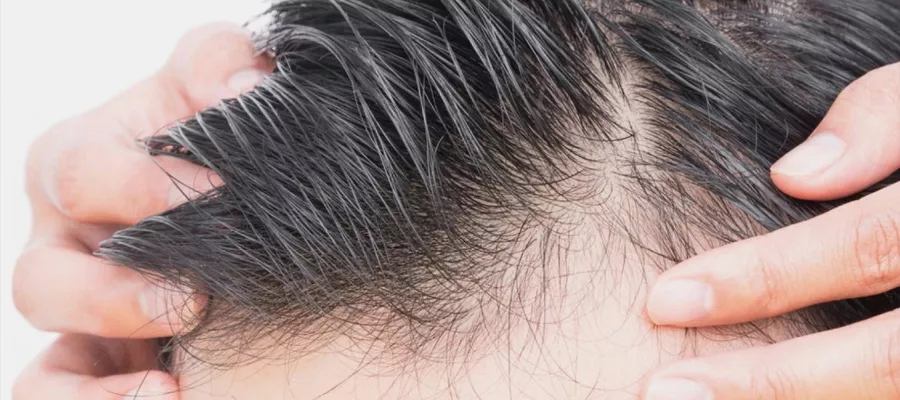
- First, the area of hair loss and the donor area are analyzed in detail.
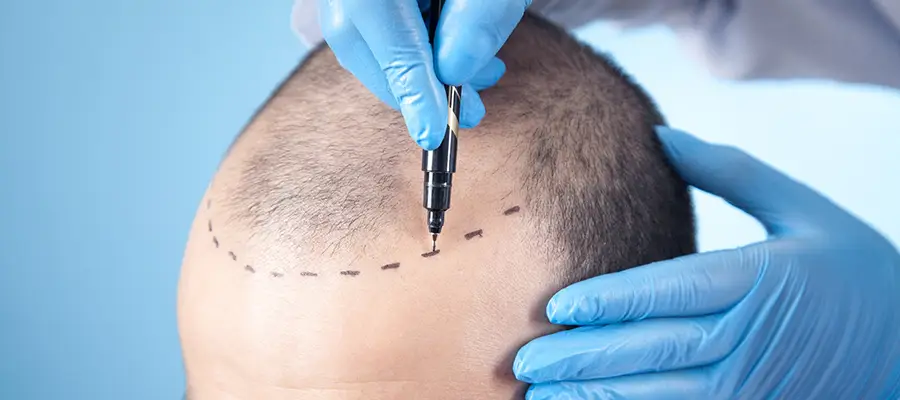
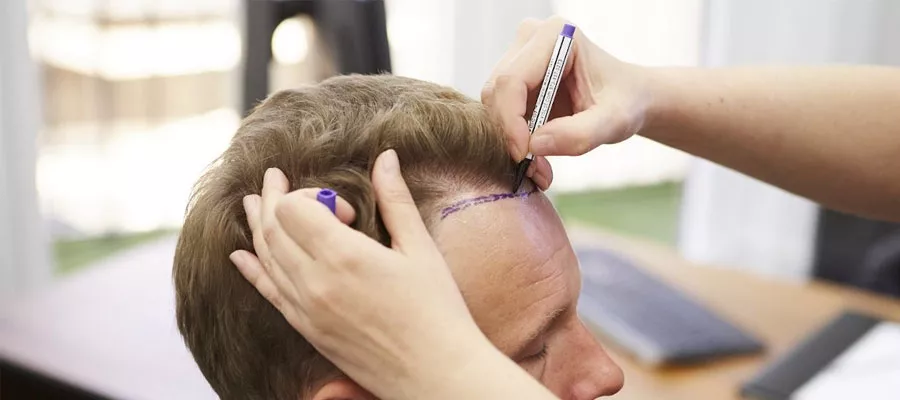
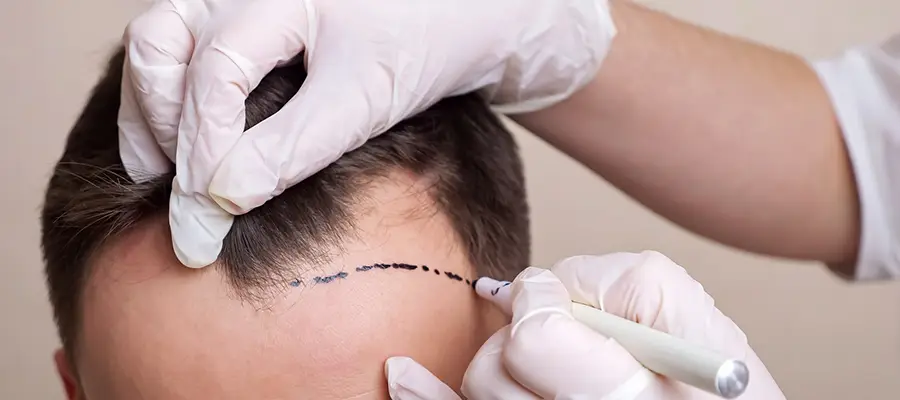
- A personalized hairline and transplant plan is created.
- On the day of the operation, both the donor and recipient areas are numbed with local anesthesia.
- Hair follicles are extracted one by one from the donor area using the FUE method.
- The harvested grafts are counted and separated according to their viability.
What is the difference between Sapphire FUE and Classic FUE?
In Sapphire FUE, channel opening is done with a sapphire tip, whereas in classic FUE, this procedure is performed with a steel scalpel.
Sapphire tips are sharper and smoother, causing minimal damage to the skin. This means faster healing, less crusting, and a reduced risk of infection. Sapphire FUE allows for more frequent and controlled channel creation. In classic FUE, the channel shape may be wider, which can affect graft placement. While Sapphire FUE stands out in terms of aesthetics and comfort, both methods can yield successful results with the right technique.
What is a Sapphire Blade Used For? Its Role in Channel Opening
The sapphire tip is used to create channels in hair transplantation, allowing for a finer, more precise incision and accelerating the healing process.
This special tip, being made of sapphire crystal, is harder and sharper than steel. It minimizes tissue trauma by creating smoother and smaller channels. There is less bleeding during channel creation, which facilitates healthy graft placement. When grafts are placed at natural angles, the result is more aesthetically pleasing. Sapphire tips offer advantages, especially in areas requiring tightening. They reduce the risk of infection and minimize crusting and scarring.
Who is it suitable for?
Sapphire hair transplantation is suitable for individuals who desire a natural look and rapid recovery, and who have a healthy donor area.
It is preferred for hairline definition, thickening, or treating localized hair loss. Individuals with sufficient grafts in the nape area and good general health can benefit from this procedure. Sapphire tip technology is ideal, especially for aesthetically focused individuals who desire a natural angle and symmetry. It offers more precise results compared to classic FUE. The success rate is also high in individuals with fine hair. It should be evaluated by a specialist according to skin type.
Who is it not suitable for?
Sapphire hair transplantation is not suitable for individuals with serious health problems and insufficient donor areas.
The procedure may be risky for individuals with blood clotting disorders, active infections, advanced diabetes, or autoimmune diseases. Furthermore, effective results may not be achieved in patients with widespread hair loss where the need for grafts exceeds donor capacity. Individuals with skin diseases require treatment before the procedure. Every candidate should undergo a detailed examination before the procedure. Suitability should be determined by a specialist doctor. Incorrect candidate selection directly affects the results.
Sapphire Hair Transplant Advantages and Disadvantages
Sapphire hair transplantation offers the advantages of a natural appearance, rapid healing, and minimal scarring; however, the procedure may take longer.
Thanks to sapphire tips, the channels created are smaller and smoother. This allows the grafts to be placed at a more natural angle. The risk of infection, tissue trauma, and crusting is lower compared to classic FUE. However, the operation time may be slightly longer and requires expertise. Also, the quality of the materials used can affect the price. When performed by experienced hands, the results are quite successful. It is one of the primary choices for individuals with aesthetic concerns.
How long does Sapphire Hair Transplantation take?
Sapphire hair transplantation typically takes 6 to 8 hours; the procedure time varies depending on the number of grafts and the planning.
Before the procedure, local anesthesia is applied, and grafts are harvested using a micro-motor. Then, micro-channels are opened with sapphire tips, and the grafts are placed into these channels. Precise channel opening may slightly prolong the process. In individuals with a large number of grafts, the procedure may take several hours longer. The patient is conscious and can rest comfortably throughout the procedure. In some cases, the session may be divided into two days. Planned and meticulous work may take longer, but it supports natural results.
Is Sapphire Hair Transplantation Permanent?
Sapphire hair transplantation is permanent because the transplanted grafts are taken from areas resistant to hair loss and will last a lifetime.
In sapphire hair transplantation, the transplanted hair follicles are genetically resistant to hair loss, providing permanent results in the long term. Shock shedding may occur in the first few months, but this is temporary; the follicles remain in place and new hair begins to grow. Full results are usually seen within 8–12 months. Micro-channels opened with sapphire tips facilitate graft placement and support a natural appearance. Additional sessions may be necessary if existing hair loss continues, but the hair transplanted in the first procedure is permanent.
Sapphire Hair Transplant Risks and Side Effects
Sapphire hair transplantation is a low-risk procedure, but side effects such as infection, redness, and mild swelling can occur.
Crusting and mild tenderness are normal in the first few days after the procedure. Without proper care, the risk of infection may increase, or graft failure may occur. In rare cases, asymmetry or unwanted hair loss may be observed. Early exposure to solariums and sunlight can negatively affect healing. Smoking and alcohol are factors that delay the healing process. Expert procedure and a sterile environment are important to minimize risks. Regular doctor check-ups should be followed.
When can I wear a hat/helmet, do sports, or swim in the sea after a Sapphire Hair Transplant?
After sapphire hair transplantation, protection such as wearing hats and helmets, and avoiding activities in the water, is generally required for 2-4 weeks.
Wearing accessories that put pressure on the skin, such as hats and helmets, is not recommended during the first week, as this is a delicate period for the grafts to settle. Activities such as light walking can be started after a few days, but weightlifting and intense sports should be avoided for at least 3-4 weeks. Water activities such as swimming in the sea and pools should be postponed for at least 3-4 weeks. Avoiding sunlight and tanning beds is recommended for at least one month. By paying attention to the healing process during these periods, the risks are reduced.
Sapphire Hair Transplant Prices 2026
In 2026, sapphire hair transplant prices generally range between 4,000 £ and 16,000 £
Is it normal to see “leakage/serum” in the inoculation area during the first 3 days?
Serum leakage from the transplant site during the first 72 hours after transplantation is generally normal and does not require concern.
This fluid is an outward manifestation of the applied solutions and lymphatic drainage. Its color may be clear or slightly pink. During this period, fluids between the tissues may exit as the scalp undergoes a healing process. However, foul-smelling, yellow-green, or purulent discharge may be a sign of infection. Gently patting the area dry with a soft towel and continuing with the washing routine recommended by your doctor is sufficient. If there is persistent or increased discharge, a doctor should be consulted.
If the sapphire seedlings shed irregularly after implantation, will the result be affected?
Irregular shedding of scabs is usually not a problem; if the grafts are healthy, it will not significantly affect the outcome.
The scabs should fall off within 7–10 days. Irregular shedding may be due to differences in regional healing. During this process, the scabs should not be interfered with; they should be allowed to fall off naturally. While scabs may dissolve later in some areas, this does not mean the grafts have taken hold or are lost. However, aggressive washing or manual removal can damage the grafts. If there are open areas or redness after shedding, expert examination is recommended. Generally, a homogeneous appearance begins after the second week.
What does it mean if a “bump/swelling” occurs in the transplantation area using the Sapphire Method?
Post-transplant swelling, edema, or temporary trauma can occur; it is usually harmless and resolves quickly.
Swelling usually appears in the first few days due to fluid accumulation or sensitivity in the scalp. This is part of the healing process and usually subsides on its own within a few days. If the swelling is red, painful, or warm, it may be a sign of infection. Such symptoms can be observed in delicate procedures such as DHI and sapphire FUE. Dermatological evaluation may be necessary in suspicious cases. Applying cold compresses and keeping the head elevated can reduce swelling.
How to manage white spots (pustules) that appear at the roots of the hair after Sapphire transplantation?
White spots after hair transplantation are usually a sign of folliculitis; mild spots can be treated at home with cleaning, while severe spots require medical intervention.
These small, inflamed spots are caused by clogged pores around the hair follicle. In mild cases, cleaning with lukewarm water and using antibacterial shampoo is usually sufficient. However, if the pustules increase or become painful or red, antibiotic cream or oral treatment may be necessary. They should absolutely not be squeezed or picked at. This condition is usually temporary and will heal with proper care. Maintaining good hygiene and attending follow-up appointments is recommended.
What is the ideal timing for starting minoxidil/finasteride after sapphire treatment?
Minoxidil and finasteride can generally be started 2-4 weeks after transplantation, with the approval of a doctor.
The first two weeks are the graft integration period; topical products can irritate the skin during this time. Minoxidil, whether in lotion or spray form, should not be used until the transplant area is fully healed. Oral medications like finasteride can be started earlier, but still under medical supervision. Both products can reduce shock shedding and accelerate new hair growth. The timing of these treatments should be planned individually and coordinated with the transplant specialist.
When will the hair recover in those who experience “shock loss” after Sapphire hair transplantation?
Hair usually regrows after shock loss treatment, typically starting in the second month, with noticeable recovery seen by the sixth month.
Shock shedding, also known as temporary hair loss after transplantation, can occur in both transplanted and surrounding existing hair. This is normal and occurs as hair follicles enter a resting phase. New hair growth begins in the 2nd-3rd month and becomes visible from the 6th month onwards. Full results are achieved between 12-18 months. The use of minoxidil and finasteride can accelerate the recovery process. Since stress and improper care can increase hair loss, professional supervision is important.
If a second session needs to be scheduled, how long after the sapphire transplant should it be performed?
- With Sapphire FUE, a second hair transplant session is usually scheduled 9–12 months after the first operation.
- This time is necessary for the transplanted hairs to grow and for the final result to become clear.
- Early intervention is not recommended before the results of the first session are seen.
- Complete recovery of the donor area also occurs during this time.
- In some special cases, a second session may be considered after the 6th month.
Is it enough for the Sapphire Hair Transplant Package to simply say “Sapphire”? What details should I confirm at the clinic?
- The fact that the word “Sapphire” is written on the packaging is not enough on its own.
- Ask if the grooving bits used are actually sapphire.
- Confirm whether the sapphire tips are single-use or sterilized before use.
- Clarify whether graft harvesting was performed using classic FUE or sapphire FUE.
- Find out whether the root canal opening procedure was performed by a doctor or a technician.
- Ask about the thickness (mm) options for the sapphire tips used.
- Verify that the sapphire is not just a name, but is actively used in the channel opening process.
- Be sure to find out who designed the operation plan, the number of grafts, and the hairline.